The Machame Biogas Programme: Clean Cooking, Grown From the Ground Up
The Machame Biogas Programme: Clean Cooking, Grown From the Ground Up
Five years ago, Machame Cultural Tourism began setting aside a small share of every tour booking toward something the village needed but couldn’t yet afford: a way to cook without smoke, without a daily walk into the forest, and without burning through the same trees that hold this mountain together.
That saving became the first biogas digesters you see in the photos below. What follows is the story of how they were built, why they matter here specifically, and why we’re now asking for help to build many more, for the women who don’t yet have one.
Why this starts with a walk into the forest
Machame Nkweshoo is the last village before the boundary of Kilimanjaro National Park’s forest reserve. That’s not a small detail. It’s the reason environmental stewardship isn’t a marketing line for us, it’s a daily responsibility. Every load of firewood pulled from that forest edge is a small subtraction from one of Africa’s most important water catchments, the same slopes that feed the rivers this whole region depends on.
It’s also, still, how most households here cook. A woman gets up, walks further than she should have to, and comes back with a bundle heavy enough to hurt her back. Then she cooks over an open flame in a room that fills with smoke.
What that smoke actually costs
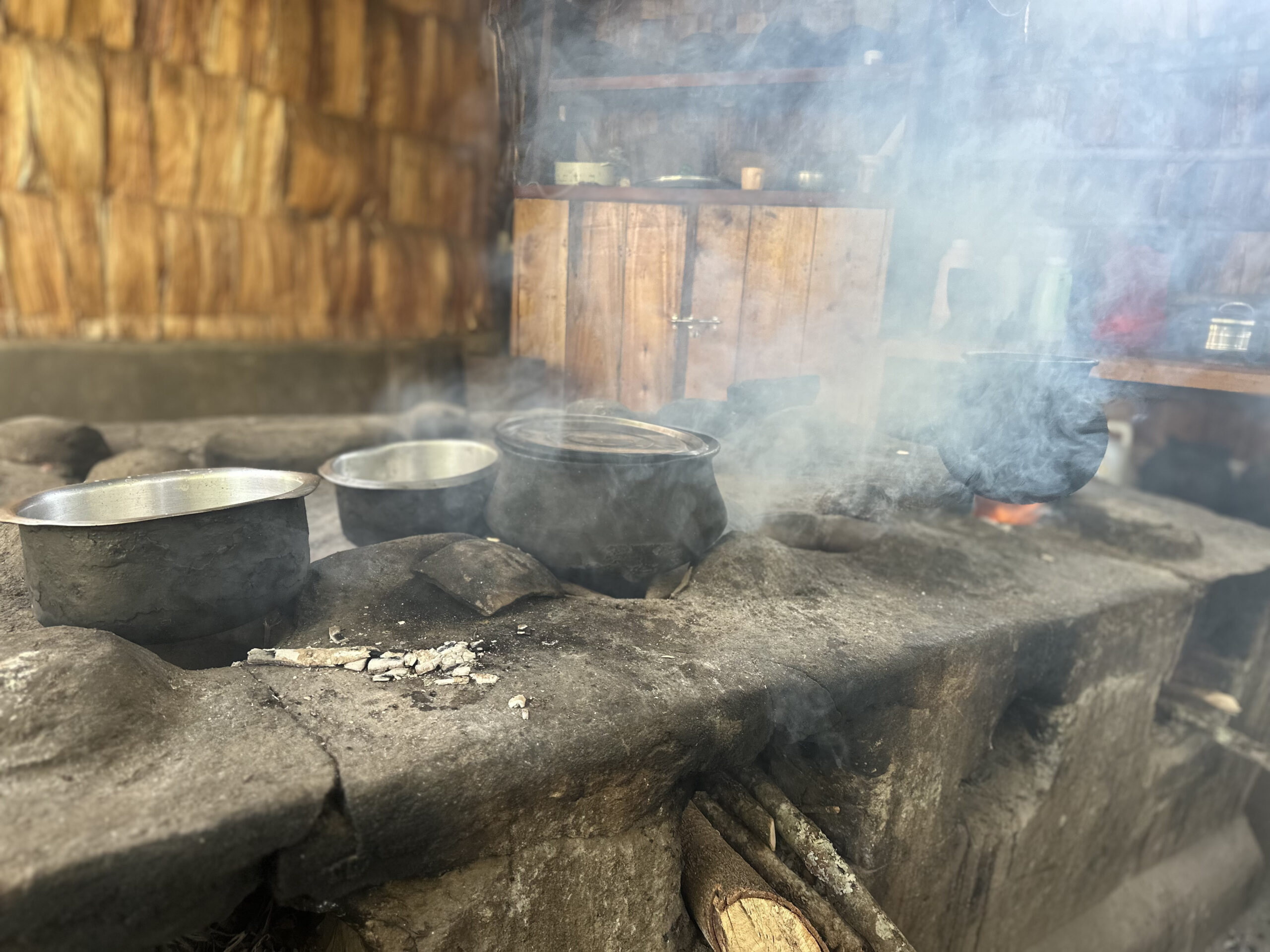
Open wood fire, surrounded by smoke, in rural Tanzania
The World Health Organisation estimates that around 2.1 billion people worldwide still cook over open fires or inefficient stoves burning wood, charcoal, or kerosene, and that household air pollution from this kind of cooking contributes to roughly 2.9 million premature deaths a year, women and young children bearing the heaviest share of that burden because they spend the most time closest to the fire.
It is not only a health cost. It is a time cost. Firewood does not gather itself, and in rural communities across Africa, that job falls overwhelmingly on women and girls, time that does not go toward farming, small business, or a child’s education. UN Women’s recent reporting from rural Tanzania documents exactly this shift in villages that have moved to cleaner cooking, women who once spent their afternoons in smoke-filled kitchens now running small businesses and taking on leadership roles instead.
This is not a hypothetical elsewhere. It is Tanzanian women, in Tanzanian villages, describing the same fire we are trying to put out here in Nkweshoo.
How the Biogas Programme digester actually works
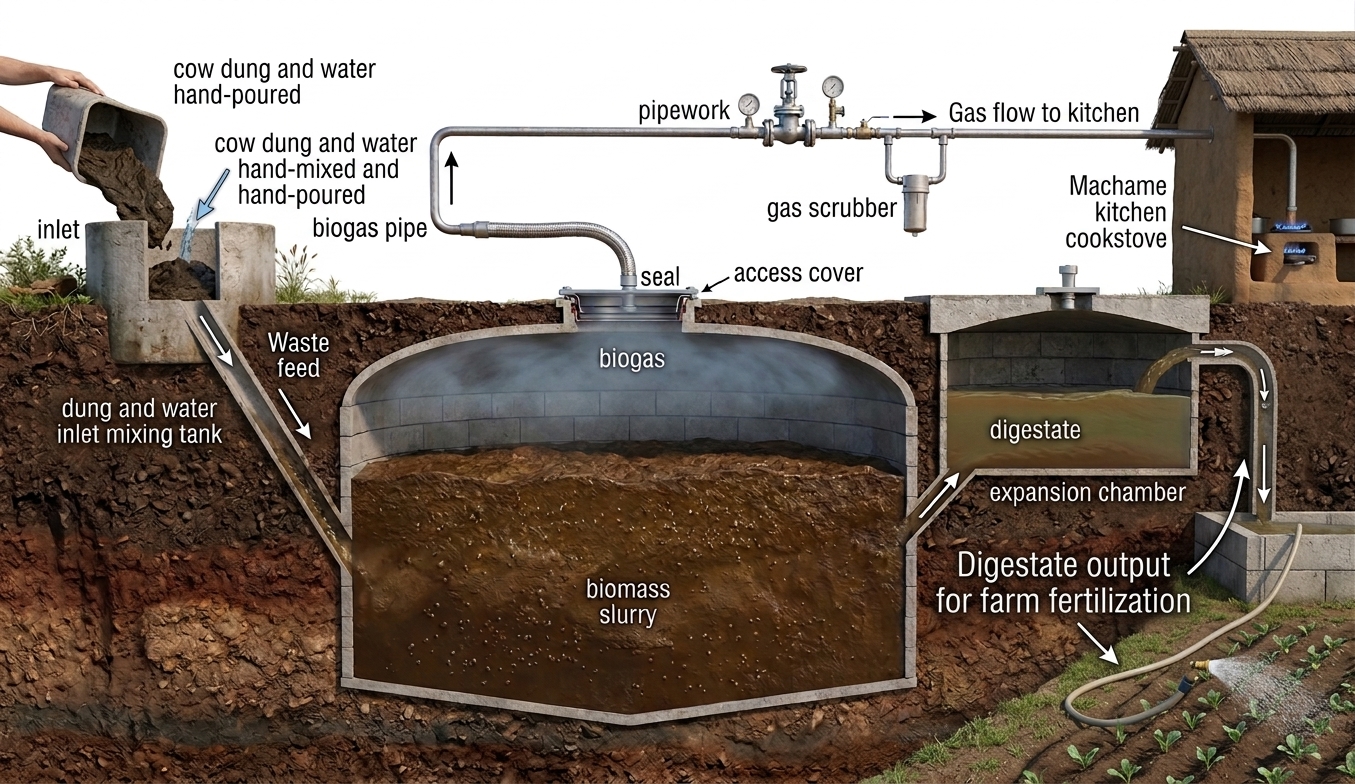
Diagram showing how a biogas digester works: inlet, slurry, digestive, expansion chamber, gas pipe, outlet
The idea is simpler than it looks buried underground. Cow dung and water go in through an inlet as slurry. Inside the sealed dome, that slurry ferments, and the methane-rich gas it produces rises and collects under pressure at the top of the dome. A pipe carries that gas directly to a burner in the kitchen. What is left behind, the digestive, moves out through an expansion chamber and an outlet, ready to go straight back onto the farm as fertiliser.
What it takes to build one
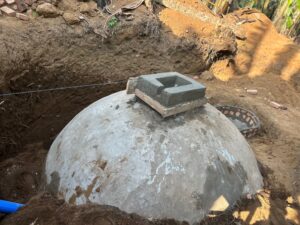
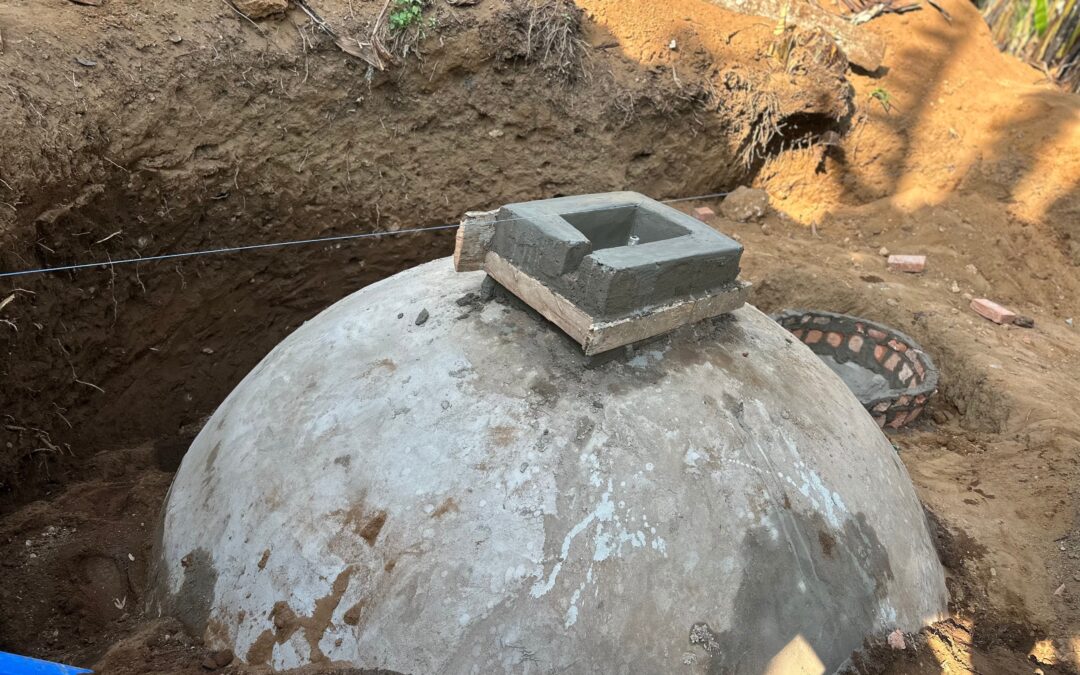
Our photographs show the real, physical labour behind that simple diagram. A pit is dug by hand, sometimes seven or eight feet down. A dome is raised from inside it, brick by brick, over a wire mesh frame, then plastered smooth inside and out. A separate small chamber is built to house the gas valve. A concrete access cover finishes it off, ready to be opened for maintenance years from now. Every digester in these photos was built by hands you would recognise if you walked through Nkweshoo with us.
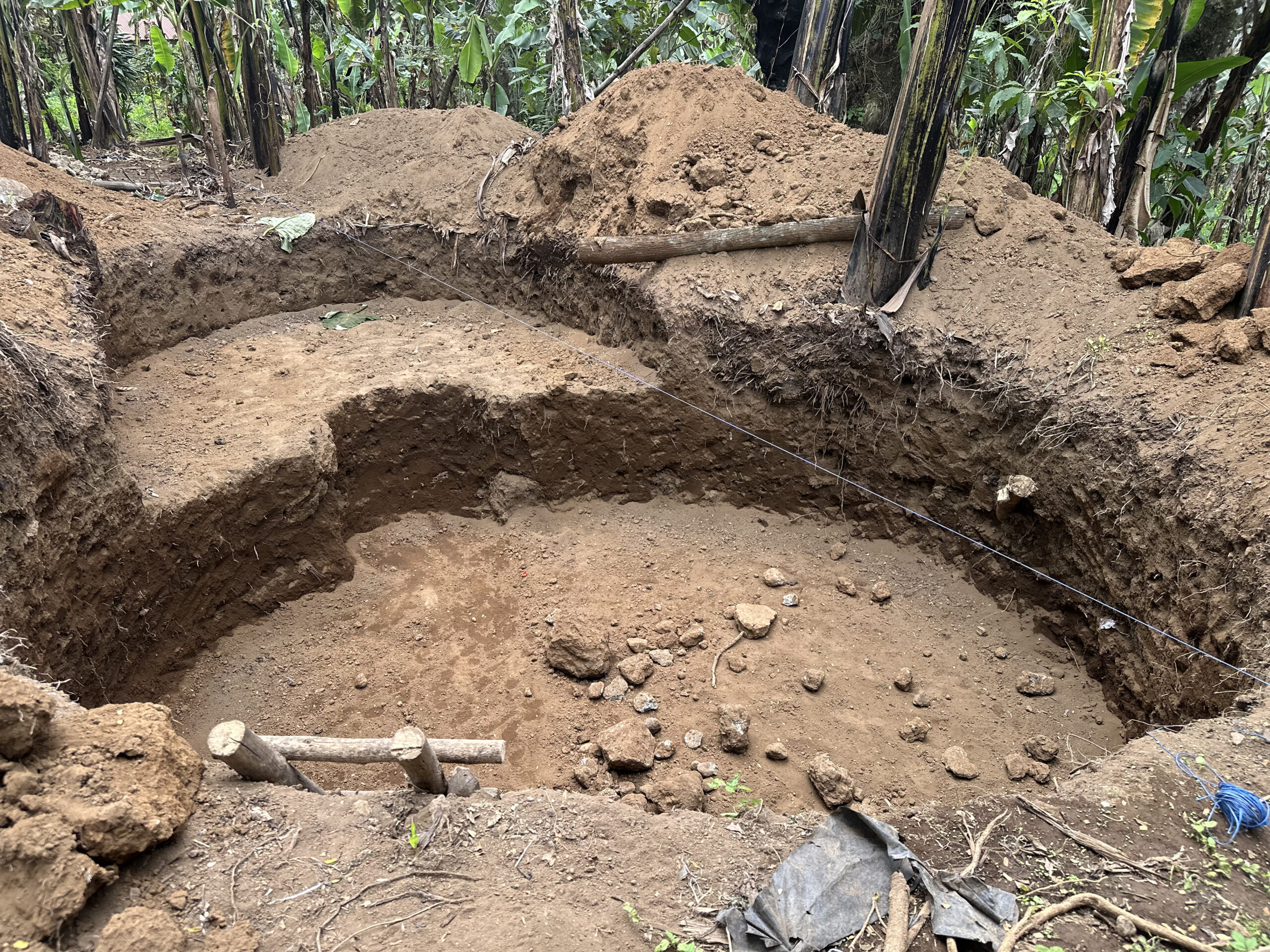
Digging the pit for a household biogas digester in Machame village
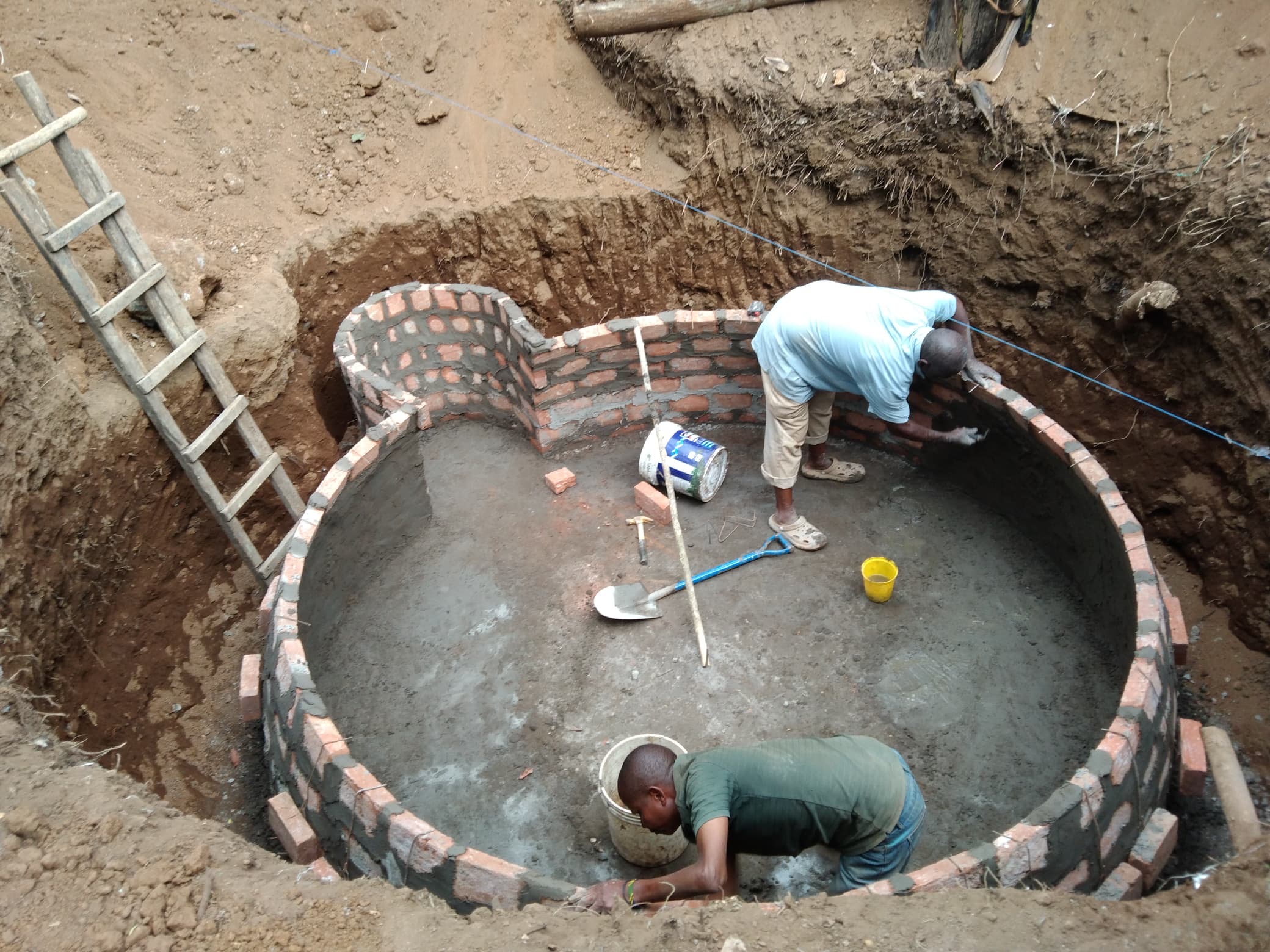
Local builders plastering the interior of a biogas digester dome in Machame
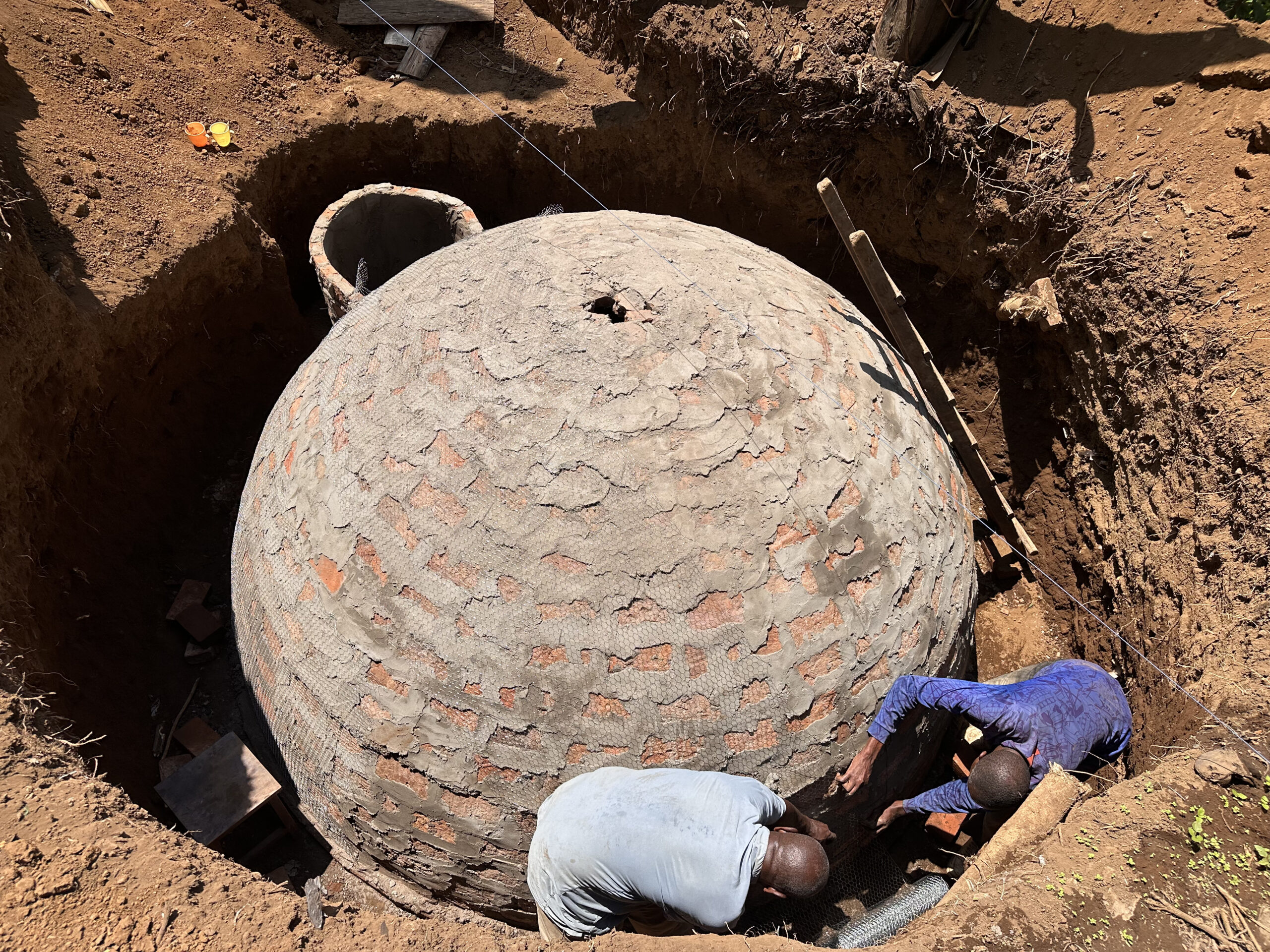
The finished dome
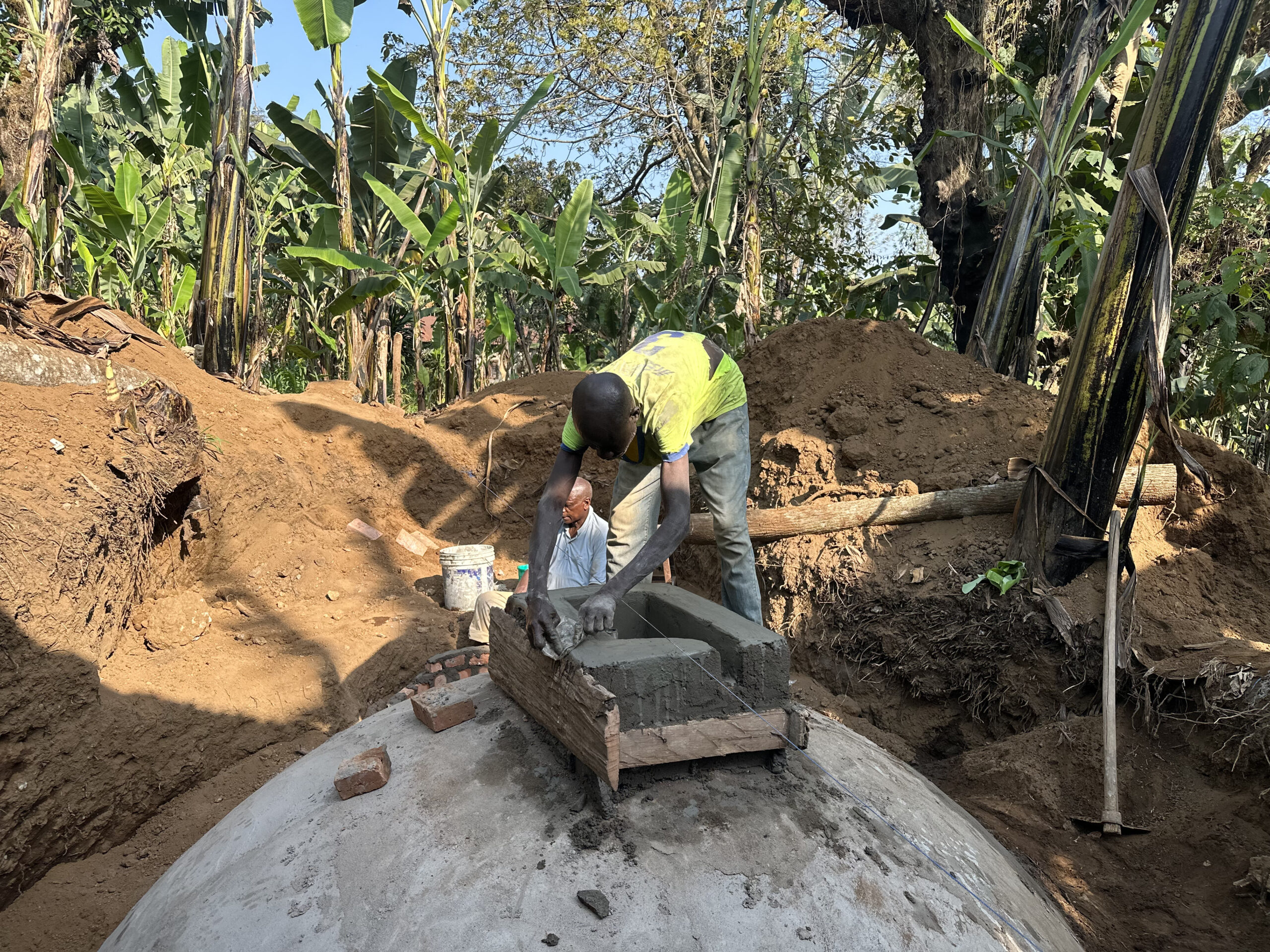
Completed biogas digester with gas valve chamber and access cover in Machame
Why this matters especially for women
This is not a side benefit of the biogas programme. It is close to the whole point.
The World Bank’s Energy Sector Management Assistance Program has documented this exact transformation elsewhere in Tanzania: a woman named Judith took a small loan to buy cows, built a biogas connection into her kitchen, and turned what used to be a daily burden into a source of savings and even new income. Reporting from The Guardian Tanzania in 2025 found women in rural districts actively asking for biogas training themselves, pointing out that they already have the dung, they just need the skills and the support to build with it.
Organisations like SNV’s Africa Biogas Partnership Programme have shown this works at real scale, over 65,000 household digesters built across sub-Saharan Africa through partnerships between local enterprises, NGOs, and governments. Tanzania’s own domestic biogas efforts trace back to a similar partnership between CAMARTEC, the Dutch government’s SNV, and the German development agency GTZ, now GIZ, that began in the northern regions of this country nearly two decades ago.
We are not asking anyone to invent something new. We are asking for the chance to bring something proven to more households in our own village.
The honest economics
Building a digester costs real money upfront, materials, skilled labour, time. We will not pretend otherwise. The two you see in these photos were built with funds set aside from our cultural tourism programme, saved gradually over five years. That is how strongly we believe in this.
But once a digester is finished, it gives a household free cooking gas for years. No more buying charcoal. No more walking into the forest for wood. No more waiting for damp firewood to catch while a child waits to be fed. And because most families in Nkweshoo already farm and keep livestock, the loop closes itself: the cow that already grazes on the farm feeds the digester, the digester feeds the kitchen, and the digestive goes right back onto the same farm as fertiliser. Nothing wasted, nothing new to manage.
Where we are, and what we’re asking for
Two digesters are proof that this works here. They are not close to enough. Nkweshoo has many more women who would benefit from exactly what you see in these photographs, and reaching them costs more than five years of tourism savings can cover on its own.
This is why we are telling this story publicly. If you represent an organisation working in clean cooking, women’s empowerment, or environmental protection on Kilimanjaro or in Tanzania more broadly, we would welcome the conversation.
Fund a digester. A direct contribution builds one more household connection, one less family cooking over open flame.
Partner with us. If your organisation works in clean energy, gender equity, or forest conservation, we would like to talk about what a partnership could look like here in Nkweshoo.
Come see it in person. Photographs only tell you so much. Visit Machame on a village cultural tour and ask to stand over one of these digesters yourself.
Reach us directly at info@machameculturaltourism.com or on WhatsApp at +255 753 221 261.